 Bellingham Exterior
 Siding Repair Built for York's Climate, Not a Generic Patch Job
York is a quiet corner of Bellingham, but its houses take the same beating every home in Whatcom County takes: damp air rolling in off the water, driving rain that comes in sideways more often than straight down, and a moss season that seems to stretch longer every year. Siding here doesn't fail because it's old. It fails because moisture found a way in and nobody caught it until the damage had already spread behind the wall. A repair that only addresses what's visible on the surface almost never solves that problem for good.
This page is about one job, done right, in one part of town: siding repair for York homes. Not a general overview of every siding issue in the Pacific Northwest — just what actually shows up on houses in this neighborhood, what a correct repair looks like, and why it matters that the crew doing the work already understands this stretch of Bellingham.
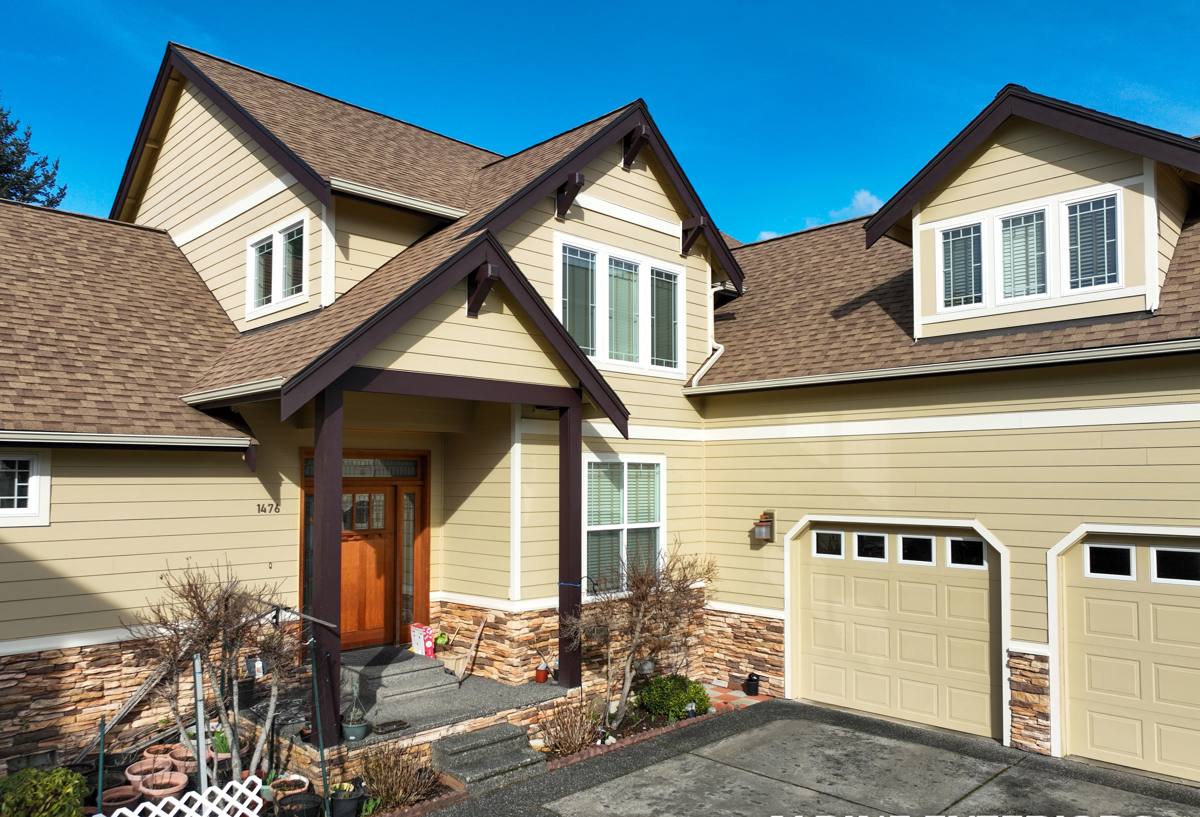
What Damage Actually Looks Like on York Siding
Salt-tinged air off Bellingham Bay is corrosive to fasteners and hard on paint film, even a few miles inland. Combine that with Whatcom County's rainfall totals and the shade many York lots get from mature trees, and you get a specific pattern of wear that's different from what you'd see on a dry, sun-exposed elevation elsewhere in the state.
The most common problems we find
- Moss and algae staining on north- and west-facing walls, especially near roof lines, fences, and anywhere siding stays shaded and damp longer than the rest of the house.
- Swollen or delaminating panels where older wood-based or composite siding absorbed water at a seam, a nail hole, or a poorly flashed trim joint.
- Soft or spongy spots near ground level, deck ledgers, and downspout discharge points — anywhere water sits or splashes back against the wall repeatedly.
- Cracked or lifted caulking around windows and trim, which looks minor but is usually the actual entry point behind a larger stain or soft spot nearby.
- Corroded or backed-out fasteners, particularly on older installations where standard nails were used instead of corrosion-resistant fasteners rated for coastal exposure.
Individually, none of these look urgent. Together, over a few wet seasons, they're how a small repair turns into sheathing damage, which is a far more expensive problem.
Why a Quick Patch Usually Doesn't Hold
The most common mistake we see on repair calls in this area isn't bad material — it's a repair that treated the symptom instead of the cause. A piece of siding gets swapped out, a bead of caulk gets run around the edges, and the job looks finished. Six months later, during the next stretch of driving rain, the same spot fails again, because the actual path water was taking into the wall was never identified or corrected.
What a correct repair actually involves
- Find the real entry point. Water rarely shows up where it enters. Tracing a stain or soft spot back to its source — a flashing gap, a caulk failure, a fastener hole — is the difference between a repair that lasts and one that doesn't.
- Check what's behind the siding. If water has been getting in for a while, house wrap, sheathing, or framing may be affected. A repair that ignores this just seals moisture in.
- Correct the drainage path, not just the surface. Proper flashing, kick-out flashing at roof-wall intersections, and correct lap sequencing matter more to long-term performance than the patch itself.
- Match material and fastening correctly. Mismatched siding profiles, wrong fastener types, or skipped clearances from grade and roofing are common causes of repeat failures.
- Finish and seal to the original standard. A repaired section should be weather-tight and visually consistent with the surrounding siding, not an obvious patch.
Repair or Replace? A Practical Way to Think About It
Not every damaged section needs full replacement, but not every problem is a candidate for a simple patch either. The table below is a general guide — the right call depends on how far the damage has spread and what's found once the siding is opened up.
| Situation | Repair Likely Sufficient | Replacement Worth Considering |
|---|---|---|
| Damage limited to one or two boards/panels | Yes | Rarely, unless material is discontinued or badly faded |
| Moisture found in sheathing behind siding | Only if isolated and caught early | Yes, especially if rot has spread |
| Siding is older wood, hardboard, or degraded composite | Short-term only | Yes — matching old material long-term is difficult |
| Moss/algae staining with sound material underneath | Yes — clean and treat, no replacement needed | No |
| Repeated failures at the same wall section | No — points to an unresolved cause | Yes, address the underlying flashing/drainage issue |
Our Process for a York Siding Repair Call
When we come out to a home in York, the visit is about diagnosis first, not a sales pitch.
- Inspection. We walk the affected elevations, check for moss, staining, soft spots, and fastener condition, and look at trim, flashing, and drainage details around the damage — not just the damaged board itself.
- Honest assessment. We tell you plainly whether this is a contained repair, a larger repair with some hidden sheathing work, or a section where replacement makes more long-term sense. If it's a simple fix, we say so.
- Written scope and price. No vague estimates — you know what's being repaired, why, and what it costs before work starts.
- Correct repair, not a cosmetic one. We address the cause of the failure, not just the visible symptom, using materials and fasteners suited to this coastal, high-rainfall part of Whatcom County.
- Cleanup and a straightforward explanation. You get a clear rundown of what was found, what was done, and what to keep an eye on going forward.
Why We Repair and Rebuild With James Hardie
When a repair requires replacing sections of siding — or when enough of a wall is compromised that a partial rebuild makes more sense than chasing one soft spot after another — we use James Hardie fiber cement. It's the only siding product we install, on repairs and full replacements alike, and that's a deliberate standard, not a default.
Fiber cement doesn't absorb and swell the way wood-based or composite sidings can, which matters directly for a neighborhood that deals with long stretches of damp weather. It's non-combustible, holds its factory-applied ColorPlus finish without the repeated repainting older siding often needs, and Hardie's HZ5 product line is engineered for exactly this kind of climate — freeze-thaw cycling, sustained moisture, and coastal air. When we patch in new material next to existing Hardie siding, it matches cleanly, and it's backed by a transferable warranty that holds up over the life of the product, not just the first few years.
We won't tell you every repair needs a full re-side in Hardie — plenty of jobs are legitimately small. But when replacement material is called for, this is why we don't reach for vinyl, LP SmartSide, or other composite options as a repair shortcut.
Signs It's Time to Call for a Repair Inspection
- Persistent moss or dark staining that returns shortly after cleaning
- Any section of siding that feels soft, spongy, or gives slightly under hand pressure
- Visible gaps, cracking, or separation at seams and trim joints
- A musty smell near an exterior wall inside the home
- Paint or finish that's bubbling, peeling, or flaking in one concentrated area rather than uniformly across the house
- Fasteners that are rusted, backed out, or leaving streaks below them
Why It Matters That the Crew Already Works This Area
York isn't a large neighborhood, and the exposure conditions on one street can differ from the next block over depending on tree cover, elevation, and how much wind and rain a wall actually takes over a season. A crew that's already done repair work in this part of Bellingham has a working sense of where moss builds up fastest, which flashing details tend to fail first on older homes here, and what correct fastening looks like for this kind of coastal, high-moisture exposure. That's not something you get from a general contractor bid sheet — it comes from having been on enough roofs and walls in this specific stretch of Whatcom County to recognize the pattern before it becomes a bigger problem.
It also means a faster, more accurate diagnosis. Instead of guessing at what a stain or soft spot might mean, we've usually seen the same failure mode on a similar house nearby, which shortens the time between the first visit and a repair that actually holds.
What to Expect Cost-Wise
Repair costs vary widely depending on how much of the wall is affected, whether sheathing needs attention, and how much matching or color-blending is involved. A small, contained repair is a modest job. A repair that uncovers hidden moisture damage costs more, because it involves opening up the wall, drying it out or replacing affected sheathing, and rebuilding correctly — work that's easy to skip but expensive to ignore. We won't give you a number until we've actually looked at the damage, because guessing on a repair estimate almost always means someone gets an unpleasant surprise later.
If you've noticed moss, staining, a soft spot, or a section of siding that just doesn't look right on your York home, we're happy to take a look. The estimate is free, there's no pressure to move forward, and you'll get a straight answer about whether it's a simple fix or something more — just fill out the form below to get started.